October 3, 2026
HR & Payroll Software for Manufacturing Companies in India
ReadDiscover Why OpportuneHR is the best HRMS Software in India! Schedule a Demo OR Call us @ +91 7700-954949


 Visited 0 times


“But the attendance was correct. Why is the salary wrong?”
This is one of those questions HR teams never want to hear during payroll week.
And yet, it happens.
An employee’s attendance is maintained in one system. Leave is approved somewhere else. Overtime is shared over email. Shift changes are updated in Excel. Payroll is processed in another system.
Everything looks fine individually.
But when all these pieces come together at the end of the month, HR suddenly finds mismatches.
A missing punch.
An unapproved leave.
An overtime entry that wasn’t included.
A new joiner whose attendance wasn’t mapped correctly.
And now someone from HR has to investigate.
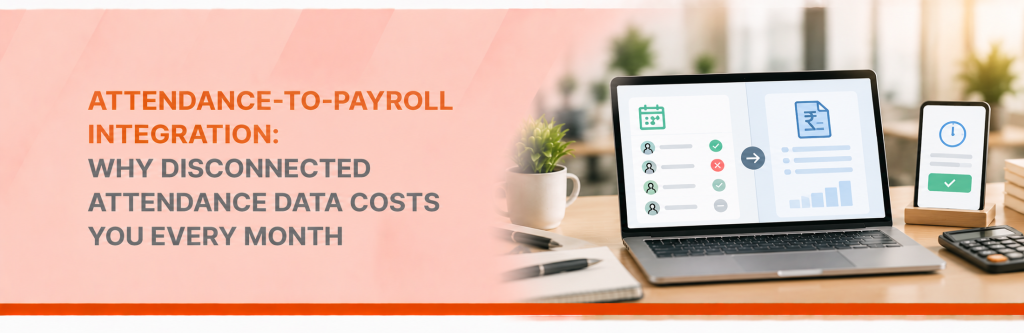
This is exactly why attendance payroll integration matters.
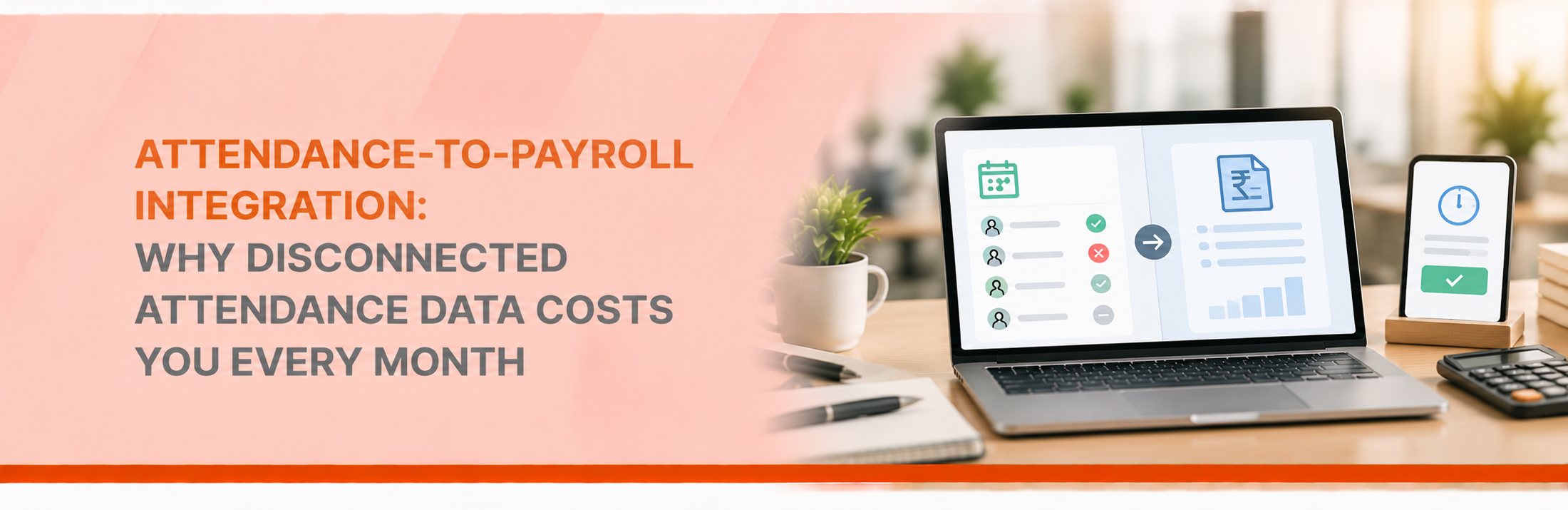
It isn’t just about connecting two software modules. It’s about creating a reliable flow of employee data from the moment an employee records attendance to the moment payroll is processed.

Payroll starts with more than salary structures.
For many organisations, attendance information can affect:
So when attendance data is inaccurate or delayed, the problem doesn’t necessarily stay within the attendance process.
It can eventually reach the employee’s salary.
That’s why attendance management in HR needs to be treated as part of the payroll process—not as a completely separate activity.
Let’s take a typical example.
An employee works 26 days in a month.
Their attendance is maintained in a biometric system.
Their leave is approved through email.
Their overtime is shared by the manager on WhatsApp.
And payroll is processed using an Excel file.
Now HR has to bring all of that information together.
It’s possible.
But every manual transfer creates another opportunity for something to go wrong.
The real cost isn’t just the software.
It’s the time spent checking, correcting and reconciling data every month.
When HR has to export attendance and manually upload or enter it into payroll, errors can happen.
Maybe one employee’s working days were entered incorrectly.
Maybe a leave adjustment was missed.
Maybe an attendance correction wasn’t reflected in the final payroll file.
These may look like small mistakes.
But when multiplied across hundreds of employees, they become a serious administrative burden.
An integrated system reduces the need to repeatedly enter the same information.
Employees don’t always have perfect attendance records.
A biometric device may fail.
Someone may forget to punch in.
An employee may be working from a different location.
A manager may approve a regularisation request.
The problem isn’t that exceptions happen.
They will happen.
The important thing is whether those approved corrections reach the payroll process.
With connected attendance HRMS workflows, approved attendance changes can be reflected in the relevant downstream processes instead of HR having to maintain another manual tracker.
Imagine an employee has taken two days of approved leave.
The leave system shows the approval.
But the payroll team is working from an attendance report that still shows those days as absent.
Now someone has to reconcile the difference.
A good attendance module in HRMS should connect attendance and leave so that approved leave is considered when attendance is finalised.
This can reduce unnecessary payroll corrections and employee queries.
For shift-based and operational businesses, overtime can be an important payroll input.
But overtime information often sits outside the attendance system.
A manager may maintain a separate sheet.
HR may receive an email.
Payroll may receive another file.
This is where things become messy.
With attendance payroll integration, approved working-hour and overtime information can follow a defined workflow before becoming a payroll input.
HR can review the data rather than manually collecting it from multiple sources.
Indian businesses often have employees working across morning, evening and night shifts.
Some organisations also have rotational shifts and different weekly offs.
When an employee’s shift changes, the attendance system needs to understand the applicable schedule.
Otherwise, a legitimate working pattern can appear as a late arrival, absence or missing punch.
This is why an attendance module in HRMS should be flexible enough to handle the organisation’s actual shift and attendance rules.
One of the biggest advantages of integration isn’t simply automation.
It’s visibility.
Before processing payroll, HR should be able to identify exceptions such as:
Instead of discovering problems after payroll is processed, HR can resolve them before payroll finalisation.
That’s a much better process.
Think about the questions HR receives after salary processing:
When attendance and payroll data are connected, HR has a clearer trail to investigate these questions.
The answer doesn’t have to depend on someone’s memory or an old Excel sheet.
When evaluating an attendance module in HRMS, don’t just ask whether it can mark attendance.
Ask whether it can support your complete process.
Look for:
Most importantly, ask:
“Show me how attendance moves into payroll.”
Don’t just accept “Yes, integration is available.”
Ask the vendor to demonstrate the complete journey.
OpportuneHR brings attendance and payroll together within its broader HRMS platform.
Employees can have their attendance captured through supported attendance methods, while HR can manage shifts, leave, regularisation and related attendance processes.
Once attendance is finalised, the information can feed into payroll workflows, reducing the need for HR to repeatedly move data between separate systems.
This creates a simpler flow:
Attendance → Leave → Regularisation → Approval → Payroll
For HR teams, the benefit is straightforward:
Less reconciliation. Fewer manual entries. Better payroll visibility.
Attendance may look like a simple “Present” or “Absent” process.
But by the time payroll is processed, that small piece of information can affect several things.
Attendance → Leave → Overtime → Payable Days → Payroll
When these processes are disconnected, HR spends valuable time moving, checking and correcting data.
When they’re connected, HR can spend more time reviewing exceptions and less time chasing spreadsheets.
That’s the real value of attendance payroll integration.
The goal isn’t simply to automate attendance.
It’s to create a reliable connection between when employees work and how that information ultimately supports payroll.
See how OpportuneHR can connect attendance, leave, shifts, regularisation and payroll in one HRMS.