September 5, 2026
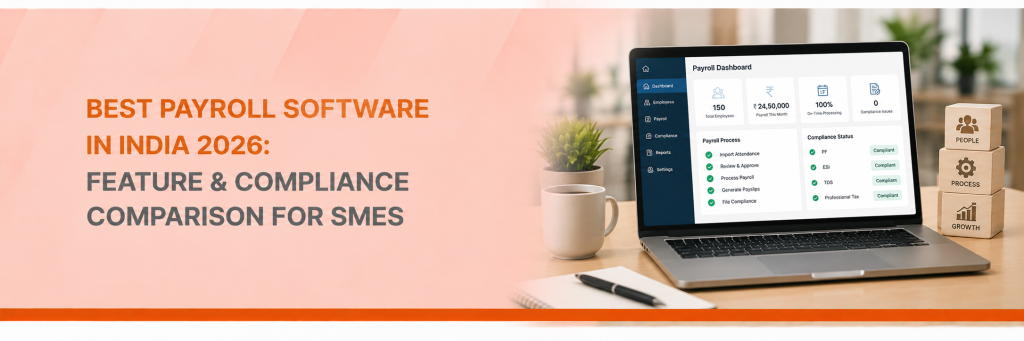
Best Payroll Software in India 2026: Feature & Compliance Comparison for SMEs
HRMS, Payroll, Payroll software, SME
ReadDiscover Why OpportuneHR is the best HRMS Software in India! Schedule a Demo OR Call us @ +91 7700-954949


 Visited 2 times


Ask any HR professional what the last few days of the month look like, and payroll will probably come up.
Attendance needs to be closed. Leave balances need checking. Salary inputs need to be verified. Finance is waiting for the final figures, and employees are already asking when their salaries will be credited.
Now imagine handling all this for 300 employees across multiple locations.
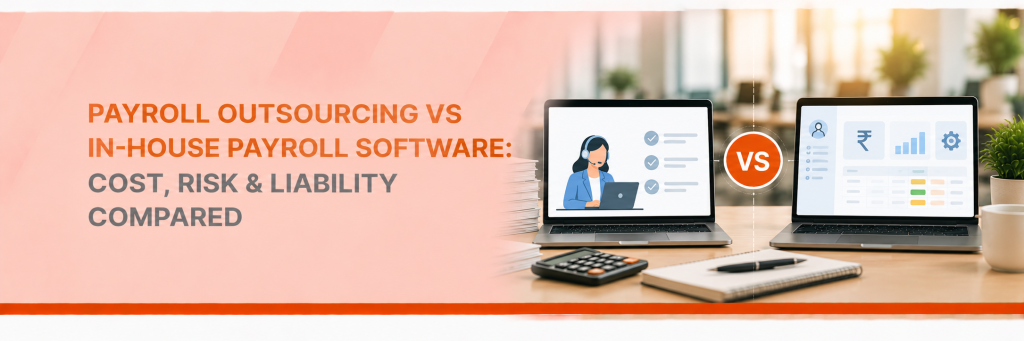
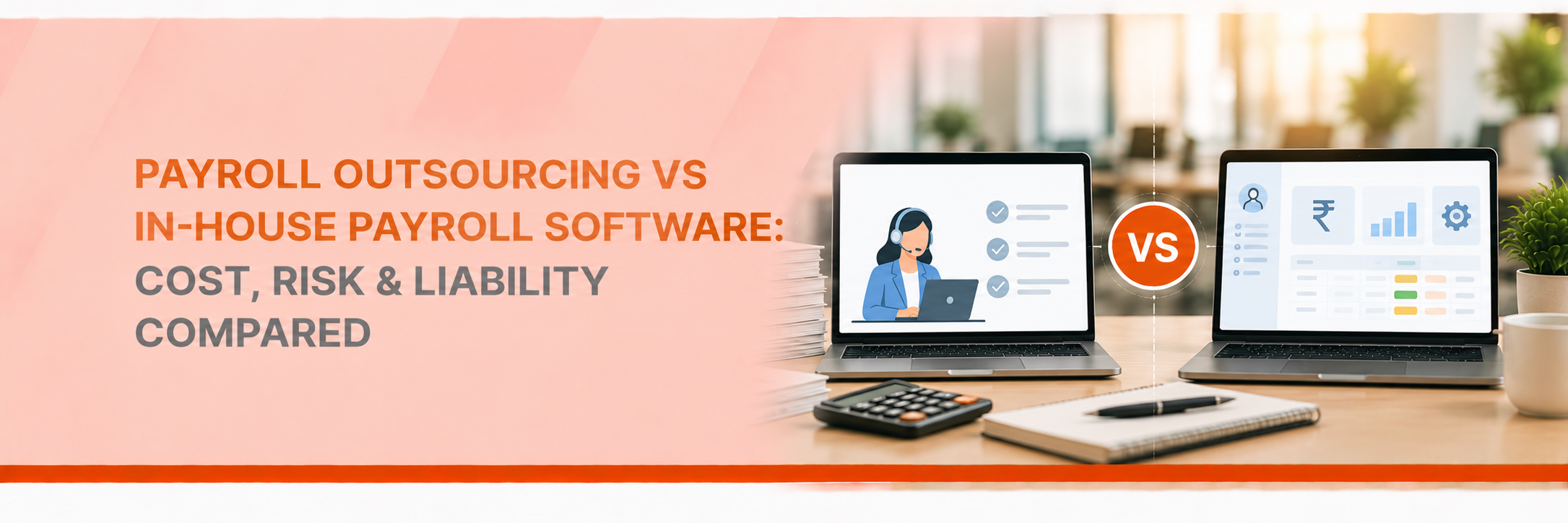
At some point, every growing business faces a question: Should we continue managing payroll internally, or is it time to hire a payroll outsourcing company?
There is no one-size-fits-all answer. Some businesses prefer having an external team handle payroll. Others want their HR team to remain in control, with the help of payroll software.
Let’s understand what each option means in everyday business terms.

With payroll outsourcing services, you ask an external provider to manage some or all of your payroll activities.
This could include calculating salaries, preparing payslips, handling deductions, generating reports and supporting statutory compliance activities, depending on the agreement.
For a small HR team already juggling recruitment, onboarding, employee queries and attendance, this can be a relief.
Instead of managing every payroll activity yourself, you have an external team to support the process.
But there is one thing to remember: outsourcing payroll doesn’t mean you can stop paying attention to it. Your team still needs to provide correct employee data, verify inputs and approve payroll. You also need to know exactly which responsibilities sit with the provider and which remain with your business.
Now consider another situation.
Your HR team uses payroll software to process salaries. Attendance and leave data are available in the system, salary structures are configured, and routine calculations happen automatically.
Your team checks exceptions, reviews the payroll and takes it forward for approval.
This is how in-house payroll software can make a difference.
Instead of depending entirely on an external provider, your own team manages the process with the support of technology.
Of course, software doesn’t magically fix incorrect attendance or missing employee information. Someone still needs to check the data and understand the payroll rules.
The benefit is that your team can reduce repetitive work and spend more time reviewing payroll rather than preparing everything manually.
When comparing these options, many businesses start with one question: Which is cheaper?
It’s a fair question, but the answer isn’t always obvious.
The payroll outsourcing cost depends on employee strength, the number of services included, payroll complexity and additional support requirements.
With payroll software, you may pay subscription and implementation fees, along with the cost of the time your team spends managing payroll.
For example, if your HR executive spends three or four days every month collecting attendance, checking calculations and correcting errors, that effort has a cost too.
So, don’t compare only the outsourcing fee with the software subscription. Look at the complete cost of running payroll, including the time, expertise and effort required.
Payroll in India comes with its own set of responsibilities. Depending on your organisation, these may include PF, ESI, Professional Tax, TDS and other applicable statutory requirements.
An outsourcing partner can bring payroll expertise and help manage compliance-related activities. But you need to understand what the provider actually does.
Who checks the calculations? Who handles filings? Who corrects an error? Who makes sure deadlines aren’t missed?
With in-house payroll software, your team has more direct control, but it also needs to ensure that the system is configured correctly and applicable changes are handled on time.
And remember, outsourcing payroll does not automatically transfer all statutory liability away from the employer.
Before choosing either option, make sure responsibilities are clearly defined.
Payroll rarely runs exactly as planned.
An employee gets a salary revision. Someone joins in the middle of the month. A new allowance is introduced. Attendance is corrected just before payroll closure.
With an outsourcing partner, your team may need to communicate the change and coordinate its processing.
With in-house payroll software, authorised users may be able to make the required changes directly, depending on the system and its configuration.
If your business has frequent salary revisions, different employee categories or location-specific requirements, this flexibility can be valuable.
Payroll isn’t just about numbers. It contains salary details, bank information, tax declarations and other sensitive employee data.
When you outsource payroll, relevant information is shared with an external provider. You need to understand how that data is protected and who can access it.
With in-house software, your team manages access internally, but security still depends on the system’s safeguards, configuration and maintenance.
Neither option is automatically safer. What matters is whether proper security controls, access permissions and backup arrangements are in place.
This is a question worth asking before signing any agreement.
Imagine payroll is due tomorrow, but an employee’s salary calculation doesn’t look right. You need someone who can understand the issue and help resolve it quickly.
With outsourcing, your experience depends on the provider’s responsiveness and service agreement. With in-house software, you need dependable vendor support and a team that understands the payroll process.
Don’t just ask how payroll works on a normal day. Ask what happens when payroll doesn’t go according to plan.
Payroll outsourcing may be a better fit if your HR team is small, payroll expertise is limited, or you prefer an external team to handle routine processing.
In-house payroll software may suit you if you want greater control, have a capable HR or finance team, and need attendance, leave and payroll information to work together.
Some businesses choose a combination: they process payroll using software and bring in external experts for specialised support or periodic reviews.
The important thing is to choose a model that matches your actual requirements, not simply what another company is doing.
If you’re evaluating payroll outsourcing companies in India, ask a few practical questions before making a decision.
What exactly is included in the fee? How are errors handled? Who manages statutory activities? How quickly will your queries be answered? Can you access your payroll records if you change providers?
If you’re evaluating software, ask for a demonstration using your own salary structure, attendance inputs and payroll scenarios.
A useful demo should show you how the system handles real situations—not just how quickly it generates a payslip.
Payroll is one of those functions employees may not think about much when everything works correctly. But one wrong salary calculation can quickly become everyone’s priority.
That is why choosing between payroll outsourcing and in-house payroll software deserves more thought than simply comparing prices.
Outsourcing gives you access to external expertise. Software gives your team the tools to manage payroll with greater control. The right choice depends on your team’s capabilities, business needs and the level of support you require.
Before deciding, look at the full picture: cost, compliance, flexibility, data security and the people who will support you when something goes wrong.
Book a comparison: Talk to our payroll team to discuss your current payroll challenges and explore the approach that fits your business.