October 6, 2026
Attendance-to-Payroll Integration: Why Disconnected Attendance Data Costs You Every Month
ReadDiscover Why OpportuneHR is the best HRMS Software in India! Schedule a Demo OR Call us @ +91 7700-954949


 Visited 0 times


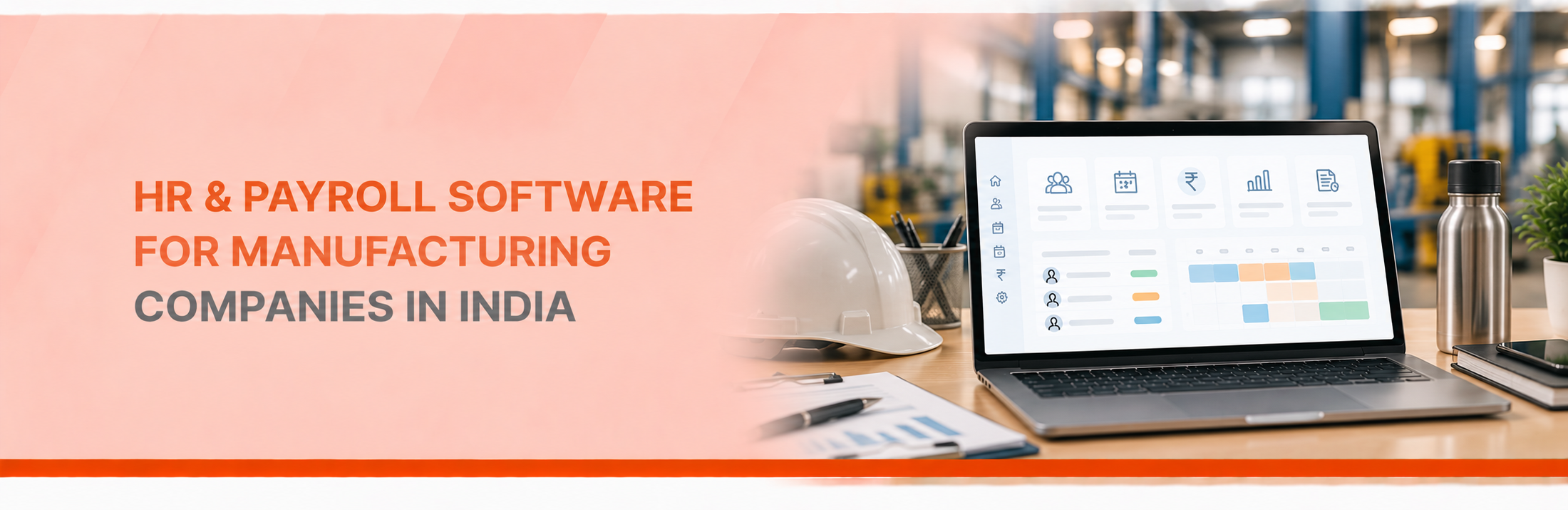
Managing HR in a manufacturing company is very different from managing HR in a typical office environment.
You may have employees working across morning, evening and night shifts. Contract workers may work alongside permanent employees. Attendance may come from biometric machines. Overtime needs to be tracked. Weekly offs may differ by team. And by the time payroll arrives, HR has to bring all of this together.
Now try managing that across Excel sheets, attendance reports, emails and separate payroll files.
It works—until the workforce grows.
That’s where HR software for the manufacturing industry can make a real difference.
The right HRMS should not just store employee information. It should understand how a manufacturing workforce actually operates.

A manufacturing workforce can include:
And each group may follow different rules.
A factory worker may have rotational shifts and overtime. A manager may work standard office hours. Contract labour may follow a completely different attendance and billing process.
This is why a generic HRMS may not always be enough.
HR software for the manufacturing industry should be flexible enough to handle these differences without making HR maintain separate spreadsheets for every process.
For manufacturing, attendance starts with the shift.
And sometimes a shift changes at the last minute because production requirements change.
This is where shift management software becomes important.
HR and managers should be able to create shift patterns, assign employees, manage weekly offs and handle changes without rebuilding the roster every time.
More importantly, shift information should connect with attendance.
If an employee is scheduled for a night shift, the system should understand that working pattern when attendance is processed.
Attendance isn’t just about knowing who came to work.
For manufacturing organisations, attendance can influence:
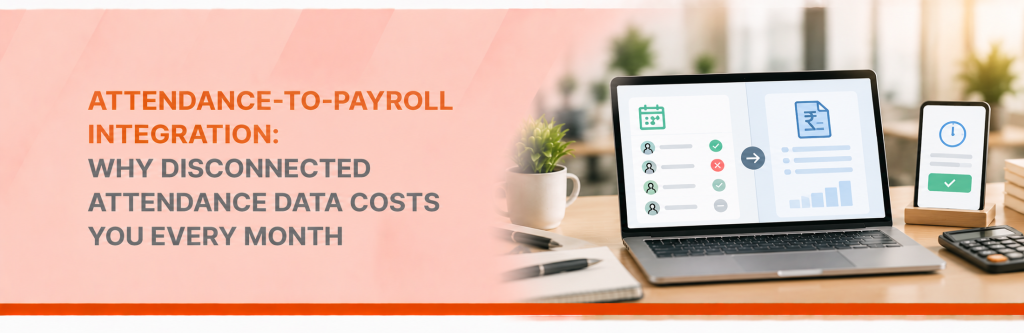
If attendance is maintained in one system and payroll in another, HR may spend hours reconciling the two.
A connected HRMS can create a simpler flow:
Shift → Attendance → Leave/Overtime → Approval → Payroll
This reduces repetitive data entry and gives HR better visibility before payroll is finalised.
Payroll software for manufacturing needs to deal with the realities of a shop-floor workforce.
That may include different salary structures, overtime, attendance-linked inputs, shift-related allowances and statutory deductions.
For Indian manufacturing companies, payroll may also involve statutory requirements such as PF, ESI, Professional Tax, LWF and TDS, depending on the organisation and applicable rules.
So don’t evaluate payroll software simply by asking:
“Can it generate payslips?”
Ask:
“Can it handle our actual payroll process?”
Take your salary structure, attendance rules and overtime policy into the demo.
That’s when you will know whether the software is actually suitable.
Manufacturing companies often work with contract labour, and managing them through the same process as permanent employees can become complicated.
You may need visibility into:
This is where contract labour management software can help.
Instead of keeping contractor information in separate Excel files, HR can have better visibility into the workforce working at each location or plant.
The important thing is not just storing contractor data.
It’s knowing who is working, under which contractor, at which location and whether the relevant information is up to date.
Manufacturing HR often operates in an environment where compliance requirements can be complex.
Depending on the organisation and workforce structure, HR may need to manage areas such as:
Your HRMS should make these processes easier to manage and provide the reports your HR and compliance teams actually need.
During a demo, don’t settle for a statement like “We support compliance.”
Ask the vendor to show you the reports and workflows.
A manufacturing company may have plants in Pune, Chennai, Gujarat, Maharashtra or other locations.
Each location may have different employee strengths, shifts and operational requirements.
Management still needs one view of the workforce.
An HRMS for manufacturing can help bring employee, attendance, leave, payroll and workforce information into a central system while allowing location-specific processes where required.
This becomes particularly useful as the business expands.
Instead of creating another Excel tracker every time a new plant opens, HR has a system that can scale with the organisation.
Manufacturing HR teams often deal with a high volume of routine employee questions.
“How many leaves do I have?”
“Why is my attendance missing?”
“Can I regularise my punch?”
“Where can I download my payslip?”
Employee self-service can move many of these routine activities away from HR.
Employees can access relevant information and raise requests, while managers can review and approve them.
That gives HR more time to focus on workforce planning, employee relations and operational priorities.
Before selecting an HRMS, ask whether it can handle your actual factory environment.
Your checklist should include:
And one question matters more than all the others:
“Can you demonstrate our actual manufacturing process?”
Don’t accept a generic demo.
Give the vendor your shift structure, attendance cycle, payroll rules and contractor requirements.
Then see how the system handles them.
OpportuneHR is designed for organisations where HR processes don’t always follow a simple, standard workflow.
For manufacturing businesses, that flexibility can be important.
Instead of treating attendance, shifts, leave, payroll and employee information as completely separate processes, OpportuneHR brings them together within one HRMS environment.
It can support areas such as shift management, attendance, payroll, employee lifecycle, workflows, reports and compliance processes, while allowing organisations to configure processes around their actual policies.
The advantage isn’t simply having more features.
It’s being able to accommodate the exceptions that happen in real manufacturing operations.
Because in a factory, the process rarely goes exactly according to the spreadsheet.
A shift changes.
Someone works overtime.
A worker moves to another location.
A contractor’s workforce changes.
An employee needs attendance regularisation.
Your HRMS needs to handle those situations without forcing HR to start the process again manually.
Manufacturing HR is not a 9-to-5 job.
The workforce may work around the clock.
Shifts change. People move between teams. Overtime happens. Contract workers come and go. Payroll still has to be accurate at the end of the month.
That’s why the right HR software for manufacturing industry should be more than an employee database.
It should connect:
People → Shifts → Attendance → Leave → Payroll → Compliance
And it should be flexible enough to handle the exceptions that come with running a real manufacturing operation.
Book an industry-specific demo of OpportuneHR and walk through your actual shifts, attendance, payroll and workforce requirements with the team.
Book an Industry-Specific Demo today.