October 9, 2026
HR & Payroll Software for Retail Businesses: Multi-Store Workforce Guide
HRMs Software, Payroll software
ReadDiscover Why OpportuneHR is the best HRMS Software in India! Schedule a Demo OR Call us @ +91 7700-954949


 Visited 41 times


It’s the last few days of the month.
Attendance needs to be closed. Leave data needs checking. New joiners have to be added. Someone’s salary has changed. Someone else has arrears. And somewhere in between all this, payroll needs to be processed correctly and on time.
For a small HR team, this can become a monthly headache.
This is where payroll software can make a real difference.
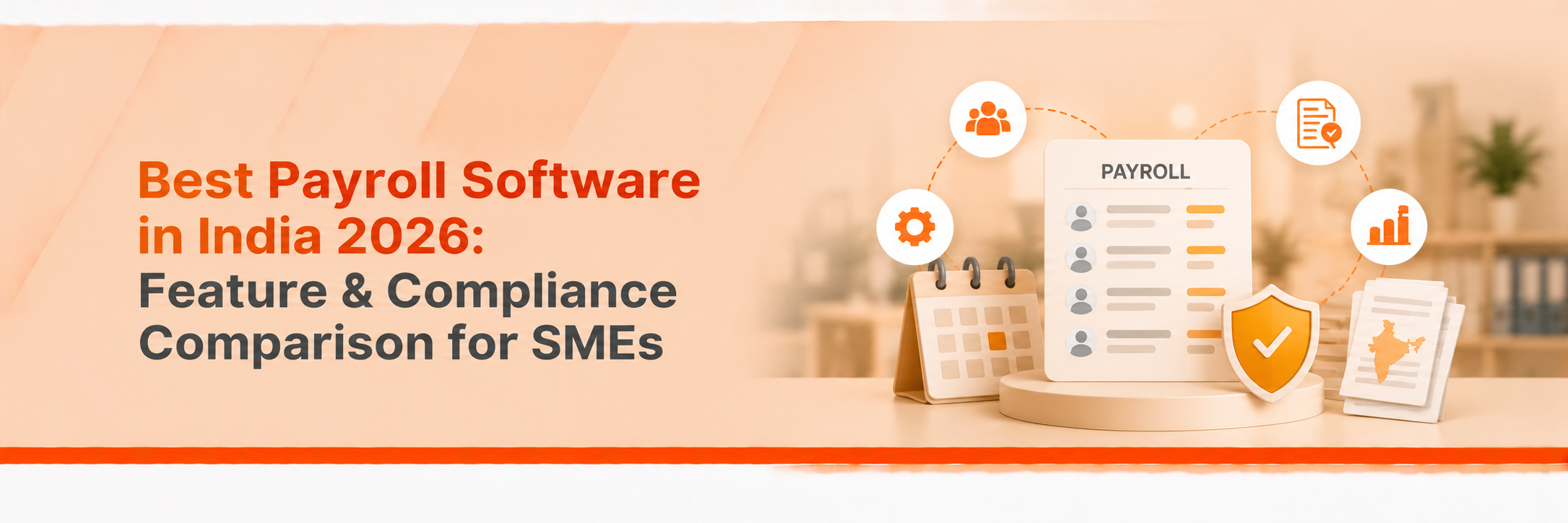
But finding the best payroll software in India isn’t about choosing the platform with the longest feature list. It is about finding software that can handle your actual payroll process without creating more work for HR.
So, if you’re an SME evaluating payroll software in India in 2026, what should you really compare?

Let’s start with the basics.
Good payroll software should help HR move from:
Attendance → Leave → Salary Calculation → Statutory Deductions → Payroll → Reports
without having to constantly move data between Excel sheets.
Before choosing a solution, check whether it can handle your real payroll requirements, including:
The important word here is “handle.”
A vendor may say a feature is available. Your job is to find out how well it works with your company’s actual policies.
For a small business, payroll isn’t usually handled by a large payroll department.
It may be one HR person doing payroll along with recruitment, attendance, employee queries and everything else that comes up during the month.
That’s why payroll software for small business should be simple enough to use without requiring a technical team.
Look for:
You shouldn’t need five Excel files to prepare one salary register.
The more payroll calculations the system can automate, the less time HR spends checking the same numbers repeatedly.
If attendance and leave are maintained separately from payroll, HR still has to reconcile the data manually.
A connected system can reduce that effort.
Employees should be able to access payslips, tax documents, leave balances and other information themselves.
Because answering “Can you send my payslip?” 50 times a month isn’t exactly the best use of HR’s time.
Payroll in India isn’t simply about calculating gross salary minus deductions.
There are statutory requirements to consider, including PF, ESI, Professional Tax, LWF and TDS, depending on the organisation and applicable rules.
This is one area where your payroll software needs to be dependable.
Ask the vendor:
Don’t just accept “Yes, we support compliance.”
Ask for a demonstration.
Some companies use separate systems for HR and payroll.
That can work.
But it can also create another problem: data has to travel between systems.
Imagine an employee’s salary changes.
HR updates one system.
Payroll needs the new salary.
Someone has to make sure the change reaches the payroll system correctly.
The same applies to new joiners, exits, leave, attendance and employee information.
That’s why HR and payroll software that connects these processes can be particularly useful for growing SMEs.
The fewer times HR has to enter the same information, the fewer opportunities there are for errors.
This is another area that often gets ignored during software demos.
Payroll doesn’t end when salaries are processed.
HR and finance may need payroll registers, variance reports, statutory reports, bank files, accounting data and employee-level information.
So ask the vendor to show you the reports—not just tell you that “50+ reports are available.”
You may discover that the report you actually need isn’t standard or requires additional configuration.
This is probably the best advice I can give an SME.
Don’t evaluate payroll software only by watching a vendor demonstrate dashboards.
Take your own payroll scenarios.
For example:
Then ask the vendor to show you what happens.
That’s how you find out whether the software is actually suitable for your organisation.
Before shortlisting any payroll software in India, compare these areas:
| What to Compare | Questions to Ask |
| Payroll | Can it handle our salary structure? |
| Attendance | Does attendance flow into payroll? |
| Leave | Are leave calculations automated? |
| Compliance | PF, ESI, PT, LWF, TDS? |
| Reports | Can HR customise required reports? |
| Employee Self-Service | Can employees access their documents? |
| Integrations | Can it connect with existing systems? |
| Support | Who helps when payroll gets stuck? |
| Scalability | What happens as employee strength grows? |
There isn’t one answer for every SME.
The right payroll software depends on your employee strength, payroll complexity, locations, compliance requirements and how much automation you actually need.
For growing Indian organisations, OpportuneHR brings HR and payroll software together with attendance, leave, employee lifecycle, performance and compliance processes.
But don’t choose a platform simply because a vendor says it is the best.
Test it with your payroll.
That is the most honest comparison you can make.
The best payroll software in India should make payroll less stressful—not give HR another system to manage.
If your team can process salaries faster, reduce manual calculations, keep statutory requirements organised and give employees access to their own information, the software is doing what it should.
So before you buy, don’t just ask:
“What features do you have?”
Ask:
“Can you solve our payroll problems?”
That answer is much more valuable.
Book a demo of OpportuneHR and walk through your actual payroll, attendance and compliance requirements with the team.