October 2, 2026
Payroll Outsourcing vs In-House Payroll Software: Cost, Risk & Liability Compared
ReadDiscover Why OpportuneHR is the best HRMS Software in India! Schedule a Demo OR Call us @ +91 7700-954949


 Visited 1 times


It’s the last week of the month, and the HR team is trying to close attendance.
One store manager hasn’t shared the attendance sheet. Another says two employees swapped shifts last week. Someone from a third store has raised a missed-punch request, and payroll is waiting for everything to be checked.
If you manage HR for a retail business, you may have had a day like this.
The tricky part isn’t always the work itself. It’s getting information from different stores, checking whether it’s correct and making sure nothing gets missed before salaries are processed.
When a business has two or three stores, a few spreadsheets and phone calls might be enough. But when there are 20 stores, 500 employees or locations spread across different cities, things get harder to manage.
That’s when retail HR software starts making practical sense.

Retail employees don’t all work the same way.
A cashier may work an evening shift. A sales executive may have a weekly off on a weekday. A store manager might be asked to help at another branch during a busy weekend. And during festive sales, the workforce requirements can change almost overnight.
Now think about managing all these employees across several locations.
If every store maintains its own attendance records, leave details and employee information, HR has to bring everything together. Even a small change can mean another phone call or spreadsheet update.
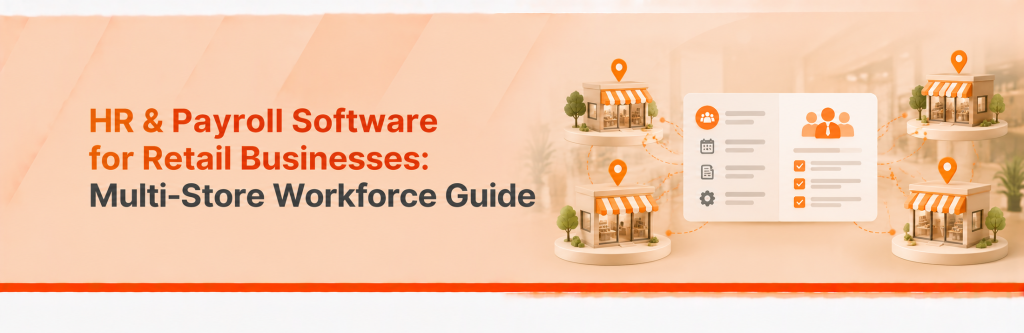
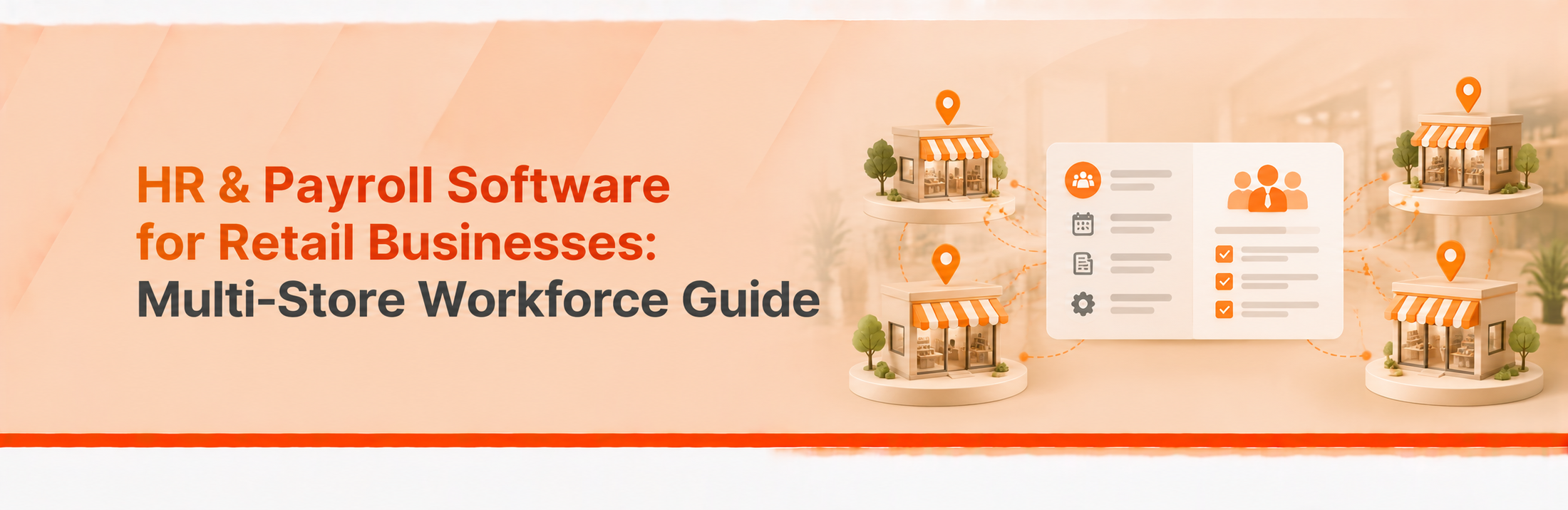
Good HR software for retail industry should make this easier by giving HR a common place to manage employee records and everyday HR activities, without taking away the store manager’s role in running their team.
Imagine you’re responsible for 25 stores.
At the end of the month, you need to know who attended work, who was on leave, who worked overtime and whether any attendance corrections are pending.
You open the first spreadsheet. Then the second. One store has used a different format, and another hasn’t sent its report yet.
Before you know it, closing attendance has become a task of its own.
This is where multi location attendance can help.
HR can view attendance across stores from one place, while store managers handle the day-to-day requirements of their teams. Employees can raise missed-punch requests, and managers can review corrections through an established process.
Instead of repeatedly asking, “Have you sent the attendance file?”, HR can focus on the records that actually need attention.
Retail schedules change all the time.
An employee calls in sick, and a colleague agrees to cover the shift. A store gets unexpectedly busy, so the manager changes the roster. During a festive sale, additional staff may be needed.
These situations are part of running a retail business. The challenge is making sure the records reflect what actually happened.
Retail workforce management software can help manage shift schedules, weekly offs, changes and attendance against planned working hours.
For example, if a shift swap is approved, the change should be recorded properly so HR can understand any difference between the original schedule and actual attendance.
The software can’t stop last-minute changes. But it can stop those changes from getting lost in messages and phone calls.
Ask an HR professional what delays payroll, and you’ll often hear about missing or incorrect inputs.
An employee worked overtime, but the information wasn’t updated. Someone took approved leave, but the attendance record still shows them as present. Another employee moved to a different store halfway through the month.
Now someone has to check the details, contact the store manager and correct the records before payroll can be finalised.
HR payroll software for retail can help connect attendance, leave and payroll processes so the relevant information is available for salary processing.
For Indian businesses, it’s also important to check support for applicable requirements such as PF, ESI, Professional Tax and TDS.
The benefit isn’t simply generating payslips faster. It’s avoiding the same round of checking and follow-ups every month.
Retail businesses often move employees between stores.
A salesperson may be transferred to another branch. An experienced employee may be sent to help a newly opened outlet. A store manager may take charge of a different location.
When this happens, HR needs to know where the employee is currently working and ensure the relevant records are updated.
If one spreadsheet shows the old location and another shows the new one, confusion can follow.
With retail HR software, employee details and location changes can be managed through a more structured process. This becomes particularly useful when the business operates across cities or keeps opening new stores.
“How many leaves do I have left?”
“Can you share my payslip?”
“Has my leave been approved?”
These questions are part of HR’s everyday work. But when the team receives them repeatedly from employees across multiple stores, they can take up a surprising amount of time.
Employee and manager self-service can help people check permitted information, raise requests and manage approvals without depending on HR for every small step.
HR remains available when help is needed, but the team doesn’t have to be involved in every routine transaction.
Before choosing a system, think about the problems your team faces every month.
Can you see attendance across all stores? Can managers access their own teams’ records? Can you manage shift changes and missed punches? Does attendance flow into payroll? Can you track employee transfers and generate location-wise reports?
Ask the vendor to demonstrate these situations using your actual requirements.
A long feature list may look impressive, but what matters is whether the system makes your team’s working day easier.
As a retail business grows, managing employees through separate spreadsheets becomes harder to sustain.
OpportuneHR brings employee management, attendance, leave, shift-related processes, payroll, workflows and reporting together in one HRMS.
Its configurable processes can help retail businesses manage their requirements across locations while maintaining central visibility. Employee and manager self-service can also reduce routine follow-ups.
For HR, that means spending less time collecting information and more time handling the people-related issues that need attention.
Retail will always be unpredictable. Someone will call in sick, a shift will change, or a store will need extra staff at short notice.
That’s part of the job.
But chasing attendance sheets, correcting the same information in different files and searching for missing payroll inputs doesn’t have to be.
The right retail HR software helps bring attendance, shifts, employee records and payroll into one process, making it easier to manage people across multiple stores.
Book an industry-specific demo to see how OpportuneHR can support your retail workforce, attendance and payroll requirements.