October 9, 2026
HR & Payroll Software for Retail Businesses: Multi-Store Workforce Guide
HRMs Software, Payroll software
ReadDiscover Why OpportuneHR is the best HRMS Software in India! Schedule a Demo OR Call us @ +91 7700-954949


 Visited 31 times


Ever had one of those weeks where you were extremely busy—but by Friday, you’re not quite sure what really moved forward?
That’s more common than we admit. And that’s exactly the problem OKR performance management is built to solve.
They don’t add more work. They bring clarity to the work you’re already doing.

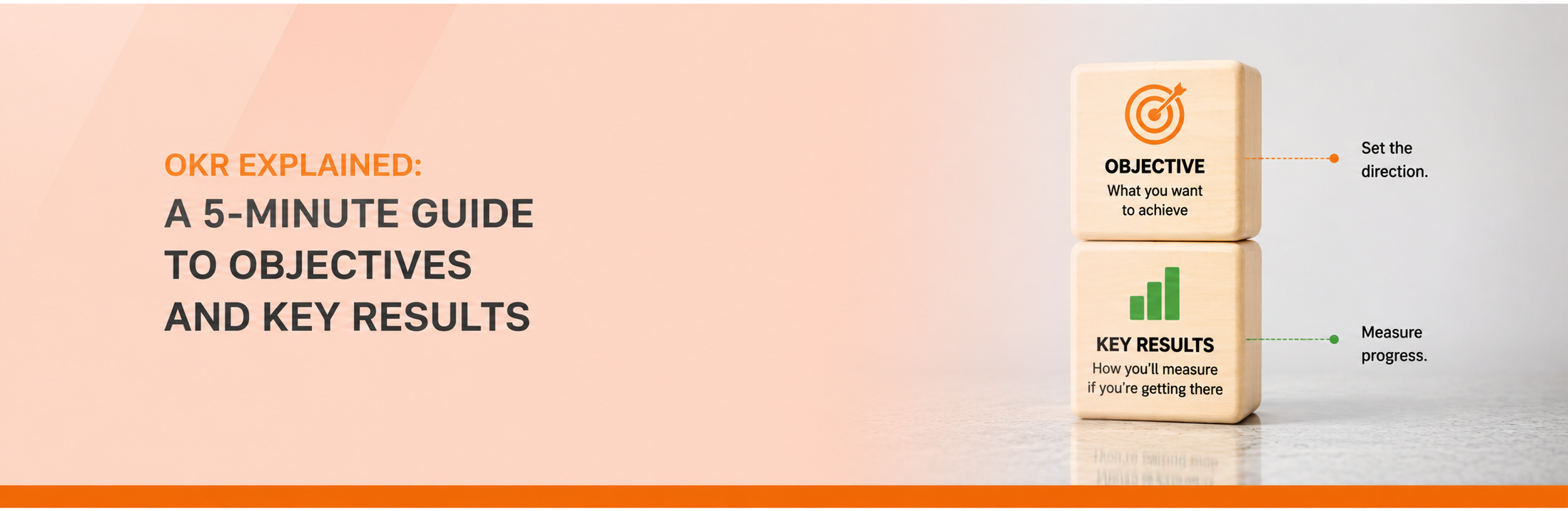
An OKR is a goal-setting method that helps you define:
In simple terms: The objective sets the direction. Key results tell you if you’re on track.
Because effort without direction can feel like progress—but often isn’t.
OKRs help teams:
It shifts conversations from “We’re working hard” to “Here’s what we’ve achieved.”
Absolutely. Let’s take something most companies care about—employee engagement.
Objective: Create a workplace where people feel motivated and valued
Key Results:
Now it’s no longer a vague goal. It’s something you can actually track.
This is one of the most common questions.
A simple way to think about it:
Both matter—but they serve different roles.
HR today is deeply connected to business outcomes—hiring, engagement, retention, growth.
That’s why OKRs work so well in HR.
Some practical use cases:
For example:
Objective: Improve hiring efficiency
Key Results:
It gives HR teams clarity and a way to show real impact.
Here’s where things usually break down—tracking.
Most teams start OKRs with energy… and then lose momentum because updates become manual and scattered.
That’s where HRMS software becomes essential.
With the right system, you can:
It makes OKRs part of everyday work—not an extra task.
Even though OKRs are simple, a few common mistakes can reduce their impact:
The idea is not to get it perfect—it’s to stay consistent.
OKRs work because they bring clarity to something every team struggles with—focus.
They help answer a simple but powerful question:
“Are we working on what truly matters?”
When teams understand their goals and can measure progress, work feels more meaningful. There’s less confusion, fewer misaligned efforts, and better outcomes.
And when you support this with the right HR software, it becomes even easier to stay on track. Goals are visible, progress is measurable, and alignment happens naturally.
In the end, OKRs are not about frameworks or jargon.
They’re about helping people do better work—with purpose and direction.