July 21, 2026
Attrition Prediction: What HR Analytics Can (And Can’t) Tell You?
ReadDiscover Why OpportuneHR is the best HRMS Software in India! Schedule a Demo OR Call us @ +91 7700-954949


 Visited 2 times


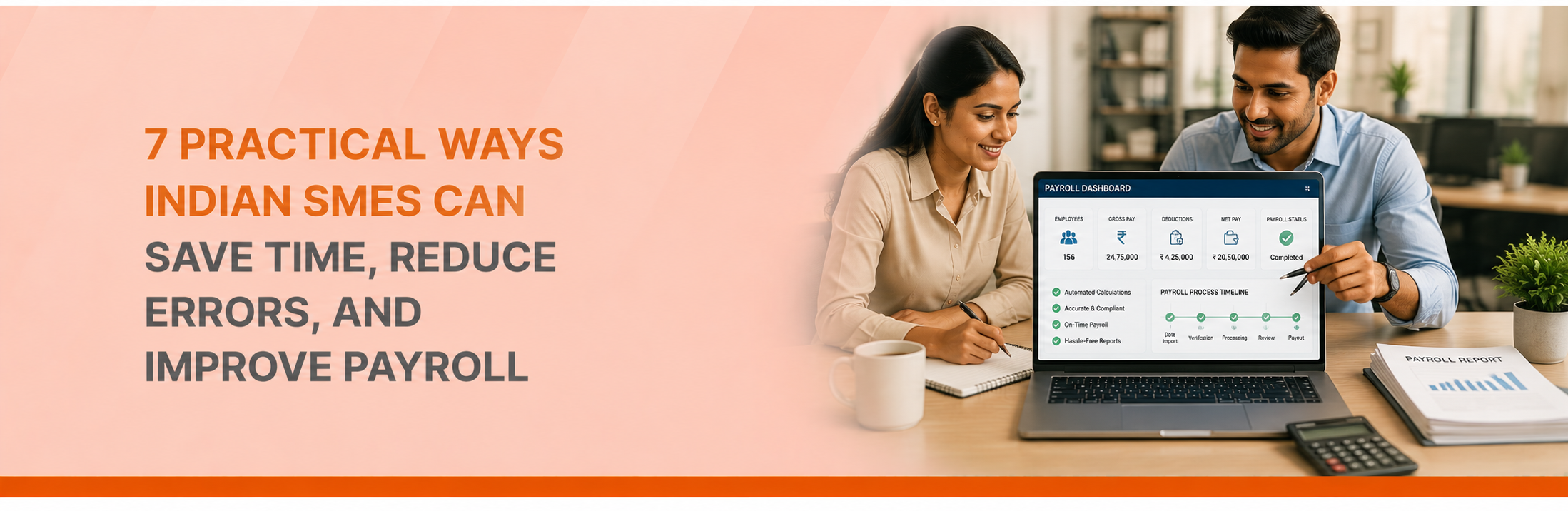
Imagine it’s the last working day of the month.
Your HR team is busy collecting attendance data, checking leave records, calculating overtime, validating tax deductions, ensuring statutory compliance, answering employee questions, and making sure salaries are credited on time.
Now imagine doing all of this with a team of just two or three HR professionals.
That’s the reality for many Indian SMEs.
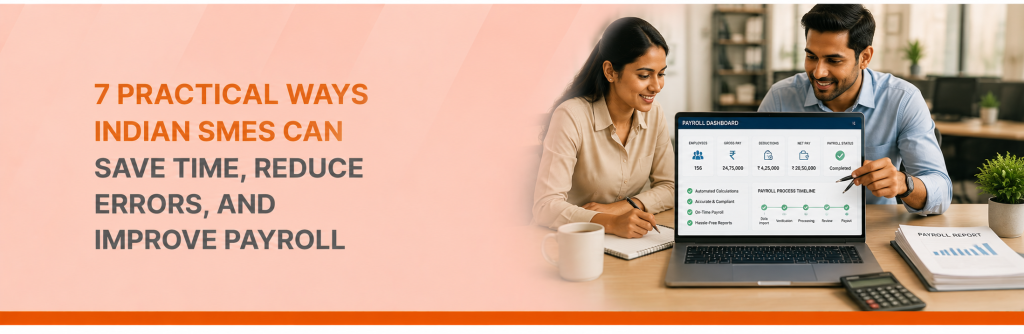
Unlike large enterprises that have dedicated payroll and compliance teams, small and medium-sized businesses often manage multiple HR responsibilities with limited resources. That’s why AI in payroll India is becoming less of a luxury and more of a practical business tool.
The good news? AI isn’t here to replace HR professionals. It’s here to take over repetitive work so HR teams can focus on people instead of paperwork.
Let’s look at seven practical ways AI is making payroll easier for Indian SMEs.

AI in payroll refers to using Artificial Intelligence to automate repetitive payroll tasks, identify errors, improve accuracy, and provide useful insights for faster decision-making.
Instead of spending hours checking spreadsheets or manually verifying salary calculations, AI helps payroll teams spot issues early, automate routine activities, and make payroll processing smoother.
AI works as an intelligent assistant for your payroll team—not a replacement.
Payroll mistakes can be expensive.
An incorrect salary calculation, missed statutory deduction, or delayed payroll can quickly affect employee trust.
For SMEs, every payroll cycle matters because HR teams are already juggling recruitment, onboarding, attendance, leave management, compliance, and employee engagement.
This is where AI helps by reducing manual work without adding complexity.
It allows HR professionals to spend less time correcting errors and more time supporting employees and business growth.
Let’s be honest.
No HR professional wants to receive that phone call saying,
“My salary doesn’t look right.”
Even a small payroll error can create unnecessary stress for both employees and HR.
AI can automatically identify unusual salary variations, duplicate payments, incorrect deductions, missing attendance records, or abnormal overtime before payroll is processed.
Instead of fixing mistakes after salaries are released, HR teams can resolve them beforehand.
That means fewer corrections and happier employees.
Payroll starts with accurate attendance.
But manually checking attendance records every month is both repetitive and time-consuming.
AI can quickly identify:
Instead of spending hours validating records, HR teams receive alerts only where attention is required.
It’s a smarter way to work—not necessarily a harder one.
Compliance is something SMEs simply cannot afford to overlook.
Whether it’s PF, ESI, Professional Tax, TDS, or Labour Welfare Fund requirements, payroll involves multiple statutory checks.
While AI doesn’t replace compliance experts, it can help identify missing information, unusual deductions, or possible inconsistencies before payroll is finalized.
Think of it as having another pair of eyes reviewing your payroll data.
Every HR team hears the same questions every month.
“When will I receive my payslip?”
“Why has my tax deduction changed?”
“How many leave days were adjusted?”
“Why is my net salary different this month?”
Answering these questions individually takes time.
AI-powered assistants integrated with HRMS Software like OpportuneHR can instantly respond to many routine payroll queries, giving employees quick answers while allowing HR teams to focus on more important conversations.
Employees get faster support.
HR gets fewer interruptions.
It’s a win for everyone.
Payroll isn’t just about paying salaries.
It’s also one of the biggest recurring expenses for any growing business.
AI can analyse historical payroll data and help SMEs estimate future payroll costs by considering:
This gives business owners better visibility while planning budgets.
Instead of reacting to rising payroll costs, they can prepare for them.
Many SMEs still depend on long email chains or manual approvals before payroll is processed.
Sometimes one delayed approval can hold up the entire payroll cycle.
AI helps by:
The result?
Less follow-up.
Less confusion.
Faster payroll processing.
Payroll data contains valuable information—but most organizations rarely use it beyond salary processing.
AI can convert payroll information into easy-to-understand dashboards showing:
Instead of looking at rows of numbers, HR leaders can quickly understand what’s happening across the organization and make informed decisions.
AI works best when it has accurate data.
That’s why businesses see better results when AI is integrated with HRMS Software.
When attendance, leave, payroll, employee records, and compliance are connected on one platform, AI has the complete picture.
This helps organizations:
For SMEs, this means enterprise-level efficiency without needing a large HR team.
Not anymore.
This is probably one of the biggest myths surrounding AI.
Today’s cloud-based payroll solutions have made AI accessible even for businesses with 50, 100, or 300 employees.
In fact, SMEs often benefit more because they have smaller HR teams managing multiple responsibilities.
The goal isn’t to automate everything overnight.
It’s to start with one challenge, simplify it, and gradually build a smarter payroll process.
For many Indian SMEs, payroll is more than a monthly activity.
It’s about paying employees accurately, staying compliant, and maintaining trust.
That’s why AI in payroll India is becoming such a valuable tool.
It doesn’t replace HR.
It supports HR.
By taking care of repetitive tasks, highlighting potential issues, and providing useful insights, AI gives HR teams more time to focus on what really matters—people.
And when AI is combined with the right HRMS Softwares like OpportuneHR, payroll becomes faster, smarter, and far less stressful.
Because at the end of the day, payroll isn’t just about numbers.
It’s about ensuring every employee receives the right salary, at the right time, with complete confidence.
To strengthen compliance knowledge and stay updated on payroll regulations, you can refer to: