October 16, 2026
HR & Payroll Software for Hotels & Hospitality Businesses in India
HRMs Software, Payroll, Payroll software
ReadDiscover Why OpportuneHR is the best HRMS Software in India! Schedule a Demo OR Call us @ +91 7700-954949


 Visited 1 times


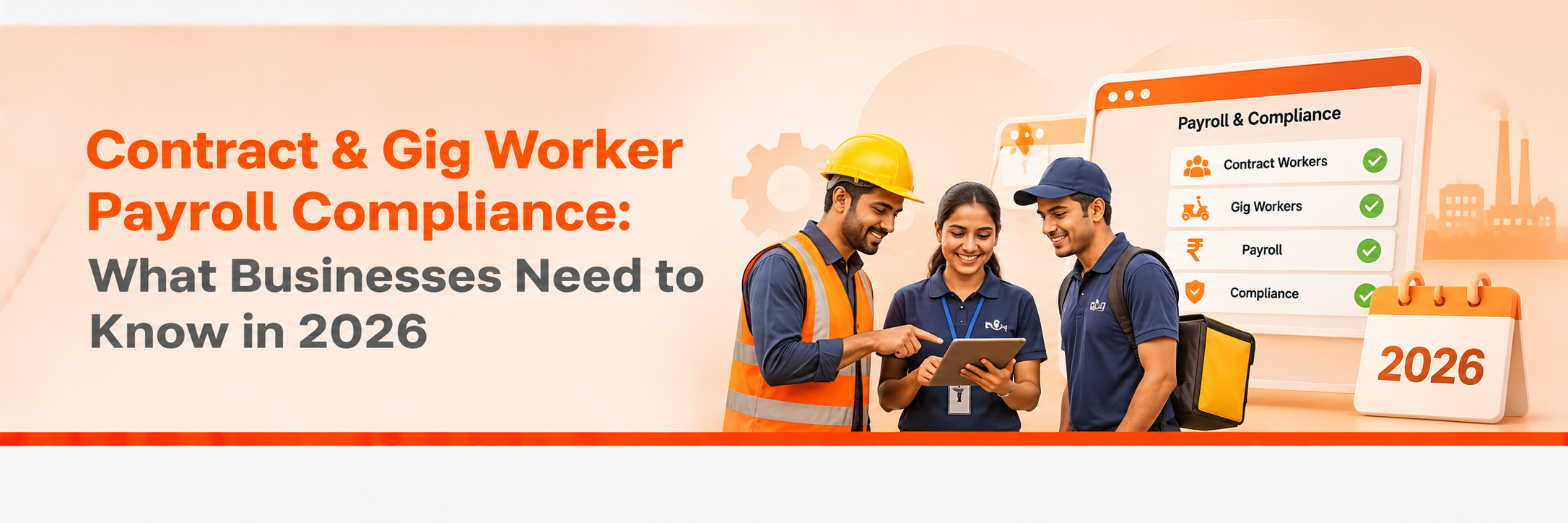
Most businesses today don’t rely only on permanent employees.
Think about a manufacturing unit. It may hire contract workers for production. An office may bring in housekeeping staff and security guards through an agency. A delivery platform may depend on thousands of riders working through an app.
Different types of workers help the business operate every day.
But here’s where things get tricky.
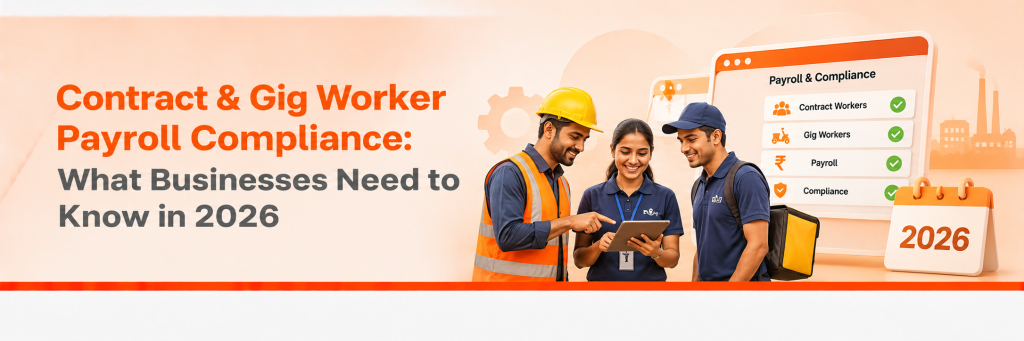
The rules for paying employees, contract workers, and gig workers are not always the same. And if businesses don’t understand these differences, they can run into compliance problems later.
Questions like these often come up:
These are important questions because payroll compliance is not just about paying people on time. It’s also about meeting legal responsibilities and avoiding problems down the road.

Let’s take a common situation.
A company hires workers through a manpower agency. The contractor manages attendance and payroll, and every month the company pays the contractor’s invoice.
Everything looks fine.
Then one day, a few workers say they haven’t received their salaries.
At that point, can the company simply say, “Please speak to your contractor”?
Not always.
While the contractor is responsible for paying wages, the principal employer may still have responsibilities if workers are not paid correctly. This is why businesses cannot treat contractor compliance as someone else’s problem.
For HR teams, the takeaway is simple:
Paying the contractor is only part of the job. It’s equally important to make sure workers are actually receiving their wages.
Many companies collect PF challans from contractors every month.
The problem is that sometimes the documents are collected but not really reviewed.
This can become a problem later.
Imagine discovering after six months that a group of contract workers was never enrolled properly under PF, or that contributions weren’t deposited correctly.
Fixing those records can take significant time and effort.
A better approach is to review compliance regularly.
Ask simple questions:
A few minutes of checking each month can save weeks of corrective work later.
Now think about a food delivery partner or a ride-hailing driver.
Their working relationship is very different from a contract worker engaged through a staffing agency.
That’s why gig workers and platform workers are treated separately under the Code on Social Security.
The law creates a framework for social security benefits, but it does not automatically make every gig worker an employee.
This is an important distinction.
Many businesses assume that all worker categories should be managed in the same way. In reality, each category comes with different responsibilities and compliance requirements.
The first step is understanding which rules apply to which workers.
Compliance becomes much easier when good habits are built into everyday processes.
Some practical steps include:
Absolutely.
When worker records, attendance data, payroll information, and compliance reports are spread across different systems, managing compliance becomes difficult.
An HRMS or payroll platform can help bring everything together in one place and make tracking much easier.
But software is only a tool.
It can help store information, process payroll, and generate reports. It cannot decide whether someone has been classified correctly or whether a specific legal requirement applies.
Those decisions still need human judgment.
Contract workers and gig workers have become an essential part of modern businesses.
But hiring through a contractor or a digital platform doesn’t remove a company’s compliance responsibilities.
The businesses that stay out of trouble are usually not the ones doing something extraordinary. They’re the ones doing the basics consistently: keeping records updated, checking compliance regularly, and addressing issues before they become serious problems.
Because payroll compliance isn’t just about processing payments.
It’s about making sure people receive what they’re entitled to and ensuring the business can confidently demonstrate that it has fulfilled its responsibilities.
Who is responsible for PF contributions if a contractor fails to pay PF?
The contractor is primarily responsible for PF payments. However, if the contractor defaults, the principal employer remains liable and EPFO can recover dues from the principal employer.
Are gig workers eligible for social security benefits under India’s new Labour Codes?
Yes. The Code on Social Security, 2020 recognizes gig and platform workers and provides a framework for benefits such as health insurance, accident cover, and social security schemes.
What are the statutory compliance requirements for employers hiring contract and gig workers?
Employers must:
What registers and records must a principal employer maintain for contract workers?
Key records include: