Visited 30 times
September 21, 2026
Shift & Roster Management Software: Building Schedules That Actually Hold
ReadDiscover Why OpportuneHR is the best HRMS Software in India! Schedule a Demo OR Call us @ +91 7700-954949


If you’re an HR professional in an SME, chances are your day doesn’t go exactly as planned.
You might start your morning scheduling interviews, only to spend the next hour resolving attendance issues. Before lunch, someone needs help downloading a payslip. By afternoon, payroll calculations need to be checked, a compliance deadline is approaching, and a manager wants hiring updates.
Sound familiar?
That’s what HR looks like in many Indian SMEs today.
Unlike large enterprises that have separate teams for recruitment, payroll, compliance, learning, and employee engagement, SME HR teams wear multiple hats every single day.
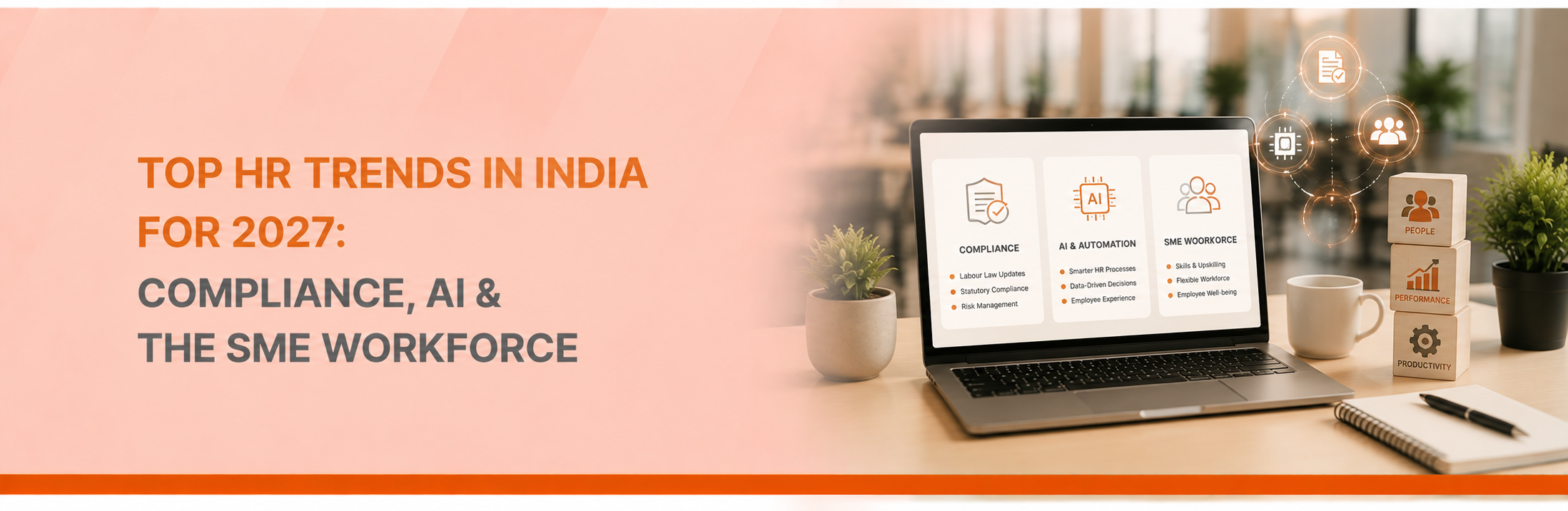
And that’s exactly why the HR trends India 2027 matter.
They’re not just about adopting new technology or following the latest buzzwords. They’re about making everyday HR work simpler, faster, and more meaningful.
Let’s look at what’s changing—and why it matters.

A few years ago, AI felt like something only big companies used.
Today, it’s quietly becoming part of everyday HR work.
From screening resumes, answering employee questions to summarizing reports and checking payroll. AI is helping HR teams save time on repetitive tasks.
The World Economic Forum’s Future of Jobs Report shows that AI will handle routine work,while human skills like communication, leadership, and problem solving will become even more important.
That’s good news for HR. Most professionals didn’t join HR to spend hours updating spreadsheets- they enjoy working with people, solving problems and helping employees grow.
AI simply gives them more time to do that.
Let’s be honest—many HR teams only worry about compliance when deadlines are near. That’s when everyone scrambles to check PF files, tax deductions, attendance, and payroll reports.
But things are changing. Digital HR systems now track deadlines, highlight missing details, and keep records updated throughout the month.
With regular updates from EPFO, ESIC, and the Income Tax Department, compliance is less about remembering dates and more about having the right systems in place. For small HR teams, that’s a huge relief and softwares like ComplyGini can be very helpful.
Think about it—when was the last time someone left a company only because of salary? It happens, but not as often as we think.
People also leave because they don’t feel valued, don’t see growth, or find communication poor. Sometimes, they’re simply exhausted.
Gallup research shows that engaged employees are more productive and less likely to quit. That’s why smart HR teams are asking a new question:
Not “How do we retain employees?” but “How do we create a workplace where people actually want to stay?”
The days of learning one skill and relying on it for years are gone. Technology changes fast, new tools arrive every month, and AI is reshaping workflows.
Employee expectations are shifting too. The Ministry of Skill Development & Entrepreneurship keeps stressing the need for continuous upskilling to prepare India’s workforce for the future.
For SMEs, this doesn’t always mean costly training programs. It can be small, regular learning opportunities built into everyday work.
HR has never had so much information available.
Attendance.
Attrition.
Recruitment.
Payroll.
Performance.
The challenge isn’t collecting data anymore.
It makes sense.
According to NASSCOM, AI and analytics are becoming increasingly important for business decision-making across industries.
For HR, this means moving beyond reports.
Instead of saying,
“Attrition increased by 12%.”
HR leaders will ask,
“Why did it increase?”
That’s where real business conversations begin.
Think about how we behave today.
If we have a banking question, we open the app.
Need food?
We order online.
Need a cab?
Two taps.
Employees now expect the same experience at work.
They don’t necessarily want to wait until HR is free just to check leave balances or download a payslip.
This is why HR chatbot India is becoming an important conversation, especially for SMEs.
They don’t replace HR conversations. Instead, they take care of routine questions so HR teams can spend more time on conversations that really need empathy, judgment and human interaction.
Many HR tech providers have seen clear drops in repetitive employee queries after chatbots were introduced. The exact results vary depending on how well the chatbot is used and the size of the business, but the overall impact is positive – less repetition and more time for meaningful HR work.
One of the biggest frustrations for growing businesses is information scattered everywhere.
Attendance in one system.
Payroll in another.
Recruitment somewhere else.
Employee documents buried in folders.
When data isn’t connected, HR spends more time searching than supporting.
Modern HRMS Software changes that.
Platforms like OpportuneHR bring recruitment, attendance, leave, payroll, compliance, performance, and employee records together in one place.
When AI works on top of connected data, it becomes truly helpful.
It doesn’t just automate tasks- It helps HR teams make faster and smarter decisions.
Small and medium businesses often have small HR teams.
These trends help reduce manual work, improve compliance, and create a better employee experience.
They also free up HR professionals to focus on strategy and people—not paperwork.
No, it’s not.
AI is taking over repetitive admin tasks, not human interaction.
Listening, coaching, hiring, developing employees, and building culture still need people.
In fact, those human skills are becoming even more valuable.
An integrated HRMS System brings everything together – payroll, attendance, compliance, employee records, recruitment, and performance management. It helps HR teams manage growth smoothly and use AI effectively to make better decisions.
If there’s one takeaway from the HR trends India 2027, it’s this:
Technology is changing HR.
But the purpose of HR hasn’t changed.
People still want to work in organizations where they feel respected, supported, and given opportunities to grow.
AI can save time.
Analytics can improve decisions.
HRMS Software like OpportuneHR can simplify everyday operations.
But none of these replace the human side of HR.
They simply remove the repetitive work so HR professionals can spend more time doing what they do best—supporting people.
And perhaps that’s the biggest HR trend of all.
In 2027, the organizations that succeed won’t necessarily be the ones using the most technology.
They’ll be the ones using technology to create a better workplace for people.