October 6, 2026
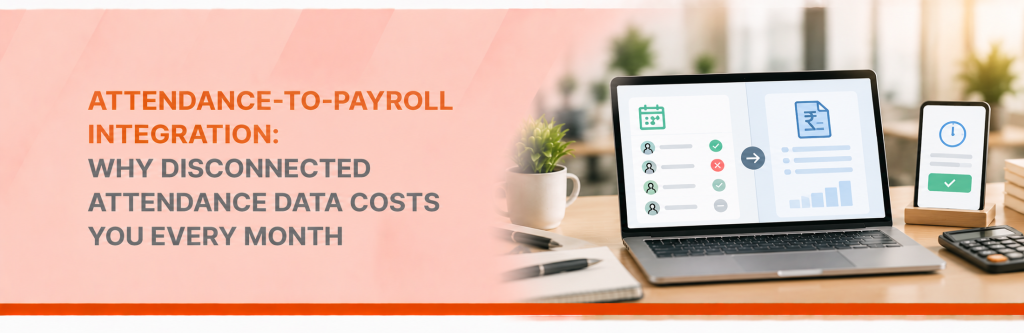
Attendance-to-Payroll Integration: Why Disconnected Attendance Data Costs You Every Month
ReadDiscover Why OpportuneHR is the best HRMS Software in India! Schedule a Demo OR Call us @ +91 7700-954949


 Visited 33 times



Payroll surely is complicated. While most payroll professionals handle the complex calculations to some extent, they dread one aspect of it—compliance adherence, even when supported by payroll software.
The reasons are many, and they try to do their best to follow the word of the law.
But many errors still creep in because the labour laws are complex, many, and keep changing constantly.
As a result, not intentionally, but unknowingly, businesses fall into the payroll non-compliance trap. Business owners and HR managers argue that these mistakes happened because of lack of knowledge. But in the eyes of law it is a punishable act, attracts hefty penalties and legal challenges. Employee dissatisfaction, too.
Let’s explore why most companies fall into this trap of non-compliance and what causes these issues.

When we say payroll compliance, it includes all the legal requirements related to employee compensation: including salaries, benefits, taxes, and contributions as mandated by law.
For Indian companies, this means following multiple labour laws such as –
The Minimum Wages Act, Employees’ State Insurance (ESI) Act, Provident Fund (PF) regulations, Payment of Bonus Act, and Maternity Benefit Act, among others.
On one hand, the laws are many, and new labour codes are regularly introduced.
As if that is not enough – there are regional variations in rules and wages.
Many companies, especially SME HR teams, may not be aware of these complexities. Sometimes they underestimate the impact of these omissions on payroll management.
1. Complexity and number of Labour Laws in India:
India has a vast number of labour laws—both at the central and state level.
These laws govern employee wages, PF contributions, bonuses, leave policies, taxation, and more.
Now take the complexities. The Minimum Wages Act alone has different wage rates for various states, industries, and skill levels. And to add to this complexity, many states revise minimum wages twice a year.
The sheer volume of these laws and their frequent updates cause confusion. It’s difficult for even experienced payroll professionals to keep track of changing laws, and their detailed provisions.
Many businesses operate with the assumption that a uniform payroll policy is good enough across all states, which is incorrect and makes them non-compliant.
2. Incorrect Salary Components:
Some companies used to lower the basic salary component to reduce PF contributions. But now, as per the new wage code, basic pay must be at least. 50%. Any company that does not make this rectification will fall into non-compliance.
3. Ignoring Minimum Wage Updates:
Minimum wages are revised often. When companies fail to update payroll software or spreadsheets with these revised minimum wage figures, it leads to underpayment. A serious issue.
4. Errors of Miscalculations of Overtime, Bonuses, and Leave Encashment:
These miscalculations result in violation of laws like the Payment of Bonus Act or state-specific leave policies.
5. Tax Deductions Mistakes:
Errors in TDS calculations or applying professional tax incorrectly based on employee location cause compliance breaches.
6. Delayed Full & Final Settlements:
Holding employee dues beyond legally stipulated timelines violates wage laws.
Many errors occur not because companies want to violate laws but due to lack of awareness or understanding.
7. Ineffective Payroll Systems:
Many organizations rely on outdated desktop payroll software or manual processes that need regular updation for these legal changes. Any gaps often results in non-compliant payroll.
Manual data entry and spreadsheets can introduce human errors in calculations or records.
8. Data Mismatch between systems:
Often there is lack of integration between attendance, payroll software and accounting systems. Any mismatch between biometric attendance logs or employee self-service portals leads to inaccuracies.
If automatic updates from government tax and labour law changes are not enabled in the payroll system, it becomes faulty and obsolete.
9. Poor Employee Data Management:
Many times the employee data is incomplete. Or, accuracies creeps in. Common errors like wrong salary details, incorrect joining dates, or improper categorization impact payroll calculations.
Plus many companies lack adequate data protection measures. This increases the risks of data breaches. Sensitive employee information is often leaked which is a violation of Indian data protection rules. Many SME companies aren’t even aware of this serious mistake.
10. Lack of Awareness About Penalties and Enforcement:
Many companies underestimate the consequences of non-compliance. The reason could be– penalties are enforced but not publicized widely. So business owners think the rules are only on paper.
This lack of awareness leads to a false sense of security. But when these violations are spotted and triggered by audits (Or employee disputes) such non-compliance damage business reputation. It affects creditworthiness for loans, and results in back payments with interest plus fines.
Here are common mistakes that highlight why many companies find themselves on the wrong side of the law:
Use Advanced Payroll Software
Automated payroll systems updated regularly with latest tax slabs and labour law changes reduce errors significantly. Integration with biometric attendance systems ensures the details are always updated and accurate salaries are paid.
Educate Your HR and Finance Teams
It’s important to train your teams in updated Indian labour laws. They should also be sensitised to the consequences of non-compliance.
Get Compliance Experts On Board.
Modern payroll software like OpportuneHR are always up-to-date with statewise compliances. But these statutory guidelines are many and a compliance expert in the team can save you from non-compliance risks.
Maintain Accurate Employee Data
Put a practice of regular audits of employee records. It ensures any discrepancies are taken out.
Monitor Regulatory Changes Continuously
Assign someone a responsibility for tracking labour law updates at both central and state levels.
Law doesn’t take into account that non-compliance happened because of lack of knowledge or missing an update.
Most Indian companies take genuine care to remain compliant, but the complexity and frequent changes in labour laws leads to payroll errors.
Inadequate HR systems contribute much to these errors. So HR managers and business owners must actively take measures to adopt advanced payroll technology.
Ongoing staff education, engaging compliance experts, and continuous monitoring of data purity are a must to ensure full payroll compliance