September 15, 2026
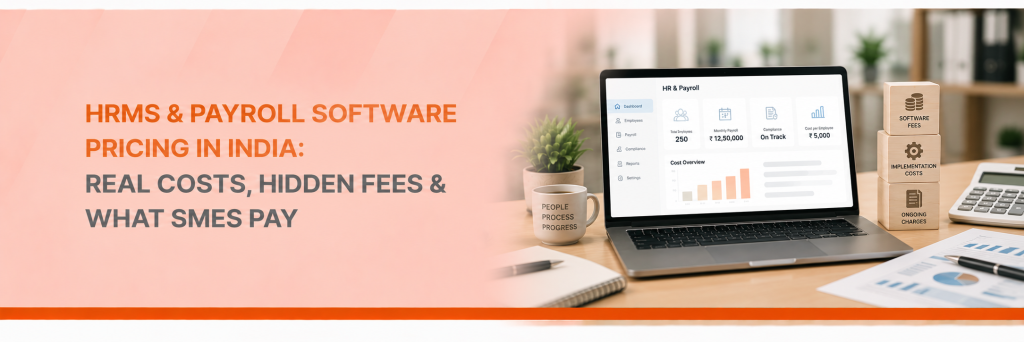
HRMS & Payroll Software Pricing in India: Real Costs, Hidden Fees & What SMEs Pay
ReadDiscover Why OpportuneHR is the best HRMS Software in India! Schedule a Demo OR Call us @ +91 7700-954949


 Visited 28 times


If you work in HR, you’ve probably felt this at some point:
You’re doing a lot—hiring, engagement, retention, training—but when leadership asks,
“What impact is HR really making?”… it’s not always easy to answer clearly.
Not because HR isn’t delivering value—but because that value isn’t always measured in a structured way. Even with HRMS software in place, HR’s real impact often stays buried in data no one reviews.
That’s where the Balanced Scorecard helps. It gives HR a way to connect everyday work with real business outcomes.

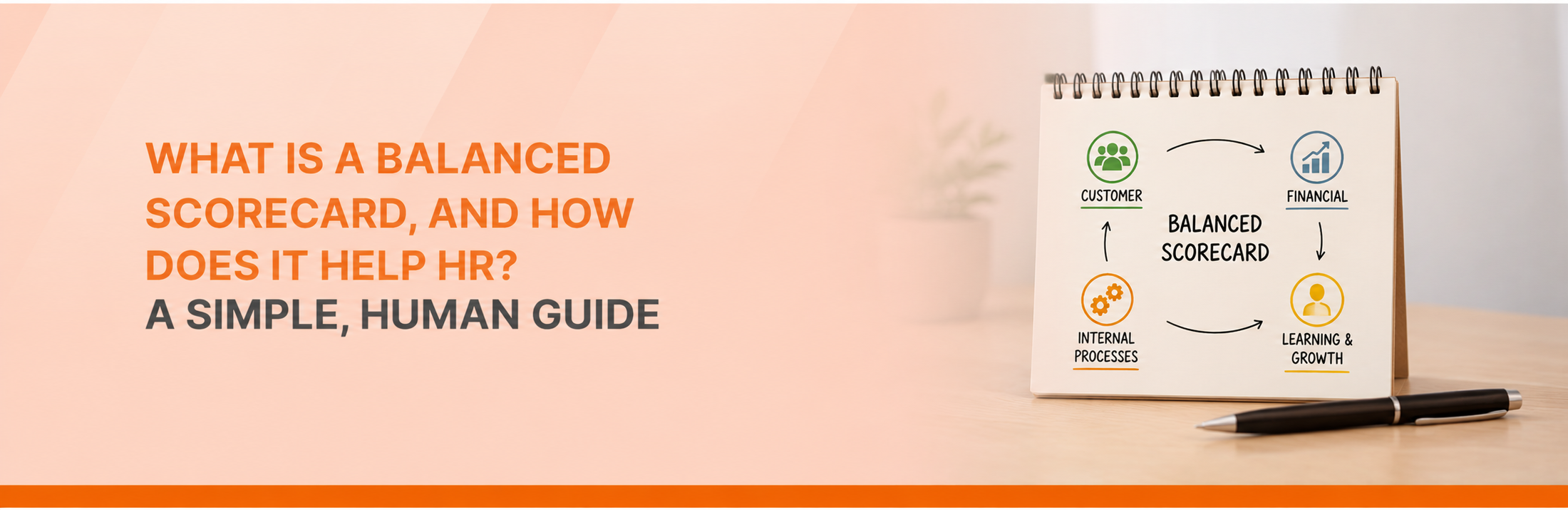
A Balanced Scorecard (BSC) is a framework that helps organizations measure performance from different angles—not just financial results.
It looks at four key areas:
In simple terms: It helps you see the full picture—not just numbers, but people and progress too.
Because HR work is often invisible when it comes to numbers.
You may:
But without clear metrics, it’s hard to show that impact.
The Balanced Scorecard helps HR:
It shifts HR from “support function” to “strategic partner.”
Let’s break it down in a way that feels real and practical.
1. Employee Perspective (Are people happy?)
This is where HR naturally plays a big role.
You track:
It answers: Do people actually want to stay and grow here?
2. Internal HR Processes (Are things running smoothly?)
This focuses on efficiency.
You track:
It answers: Is HR making work easier—or more complicated?
3. Learning & Growth (Are we preparing for the future?)
This is about development.
You track:
It answers: Are we building a stronger workforce for tomorrow?
4. Business Impact (Is HR contributing to results?)
This is where everything connects back to the business.
You track:
It answers: How is HR actually impacting business performance?
Sure—let’s say your goal is to improve retention.
Now, instead of a vague goal, you have a clear, measurable plan.
Here’s the reality—tracking all these metrics manually can get overwhelming.
Different data sources, constant updates, and multiple teams… it quickly becomes messy.
This is where HRMS Software makes a real difference.
With the right HRMS Software, you can:
It turns the Balanced Scorecard into something you can actually use daily—not just a concept.
Even though the framework is simple, a few mistakes can reduce its impact:
Keep it focused, relevant, and consistent.
The Balanced Scorecard helps HR answer a question that comes up in every organization:
“How does HR contribute to business success?”
It brings structure to your efforts, clarity to your impact, and confidence to your decisions.
When used well, it connects people, processes, and performance—so HR is not just managing tasks, but driving outcomes.
And when you combine this approach with the right HRMS Software, it becomes even more powerful. You get visibility, real-time tracking, and insights that actually help you improve.
In today’s workplace, HR is expected to do more than ever. The Balanced Scorecard simply helps you prove—and improve—the value you already bring.